Navigation
1. Help Video
2. Statistics
The database contains comprehensive statistics on secondary metabolites, including total number of secondary metabolites, species distribution, and metabolic pathways. These statistics provide an overview of the diversity and richness of secondary metabolites.
3. Search DB
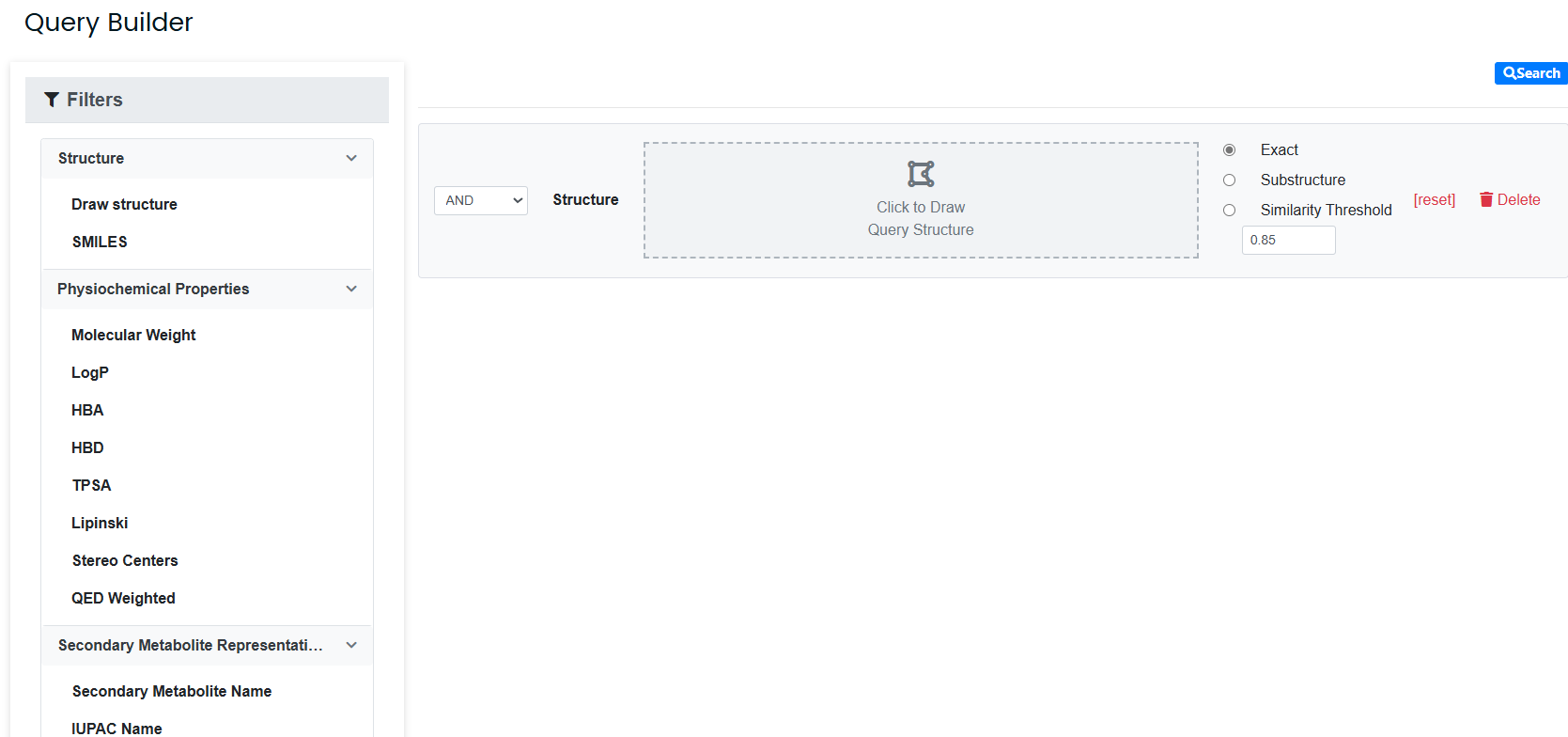
HerbalMDB offers a powerful Query Builder, enabling users to efficiently search and filter through the database. With this tool, users can conduct detailed searches using various criteria, including chemical structure, physical and chemical properties, secondary metabolite representation, species information, and classification details.
For each search criterion, users have the flexibility to use logical operators "AND", "OR", and "NOT" to refine their queries. When dealing with text - based information, options such as "is" and "contains" are available for more precise text matching. For numerical data, users can customize upper and lower limits to narrow down the results according to specific ranges. For instance, to locate the secondary metabolite "1-(Cyclohex-2-enyl)ethanone", users can input its name, molecular formula, or use SMILES notation to search for similar secondary metabolites. This comprehensive search functionality ensures that users can obtain targeted and accurate data, facilitating in-depth research and exploration of secondary metabolites.
4. Browse DB
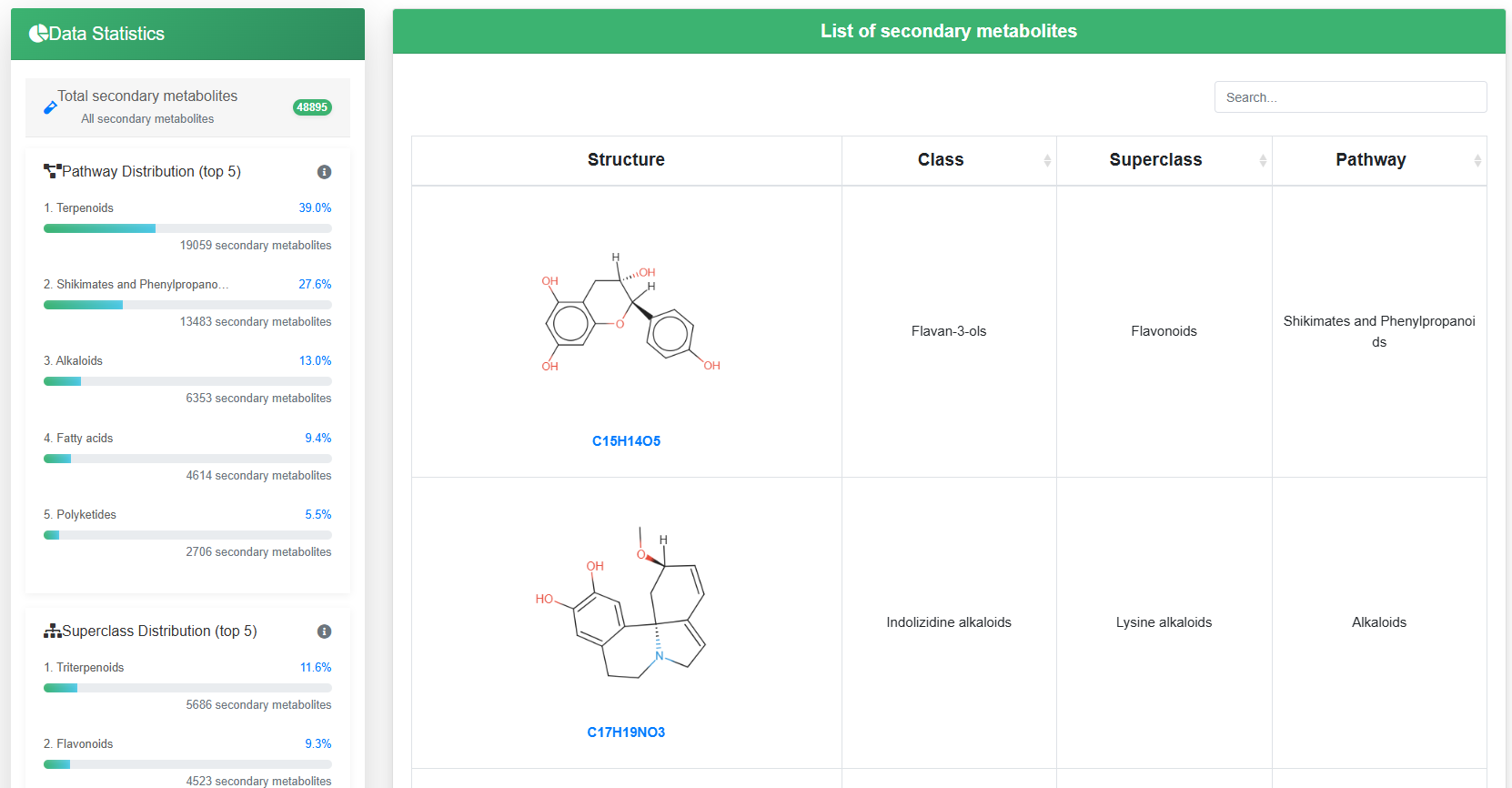
Browsing the database offers an intuitive and efficient approach to explore various categories of secondary metabolites. Users can seamlessly navigate through hierarchical classifications, including pathway, superclass, and class.
For data insights, the "Data Statistics" section presents comprehensive statistical information about secondary metabolites. To access details of primary metabolites and their associated species information, as well as classification details, users can utilize the "List of secondary metabolites". When hovering over truncated information, the full content will be revealed. Clicking on the chemical structure or SMILES notation of a secondary metabolite will redirect users to the detailed species information page. Additionally, a search bar is provided for quick and convenient searches, allowing users to easily locate specific metabolites.
5. View the detailed page
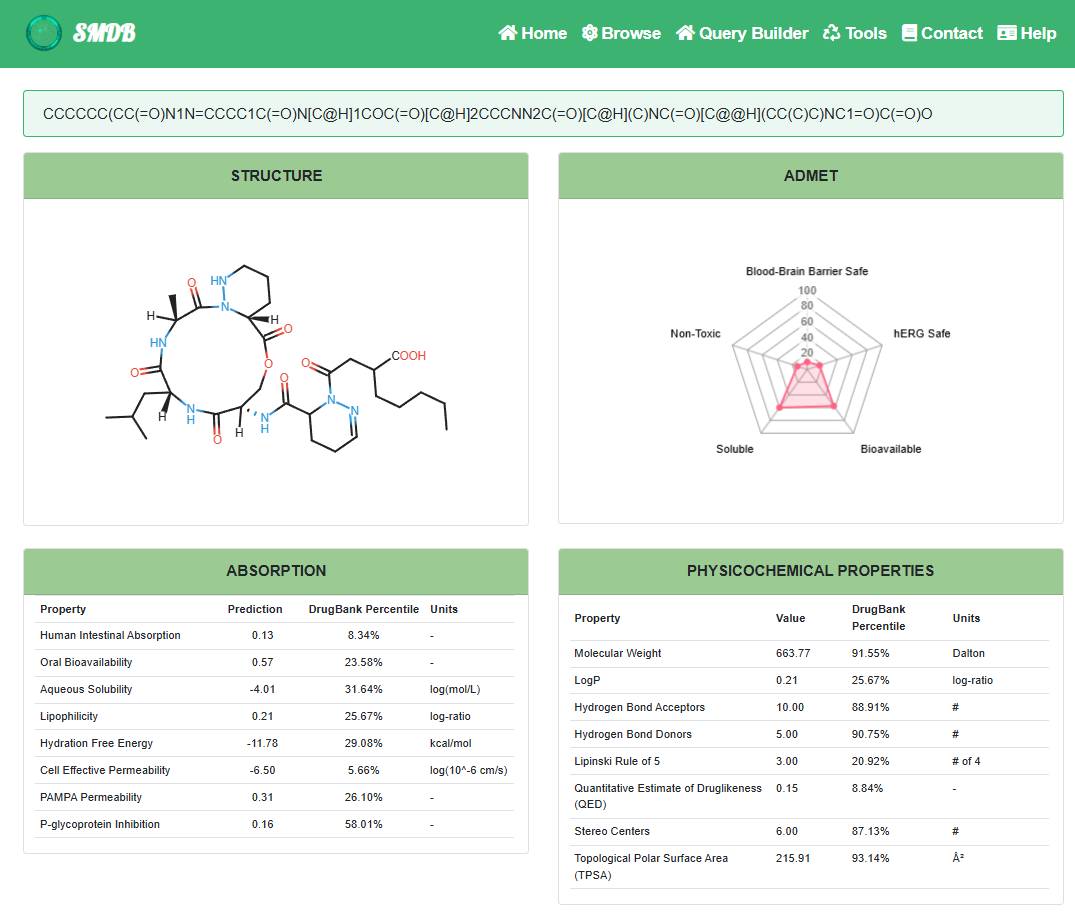
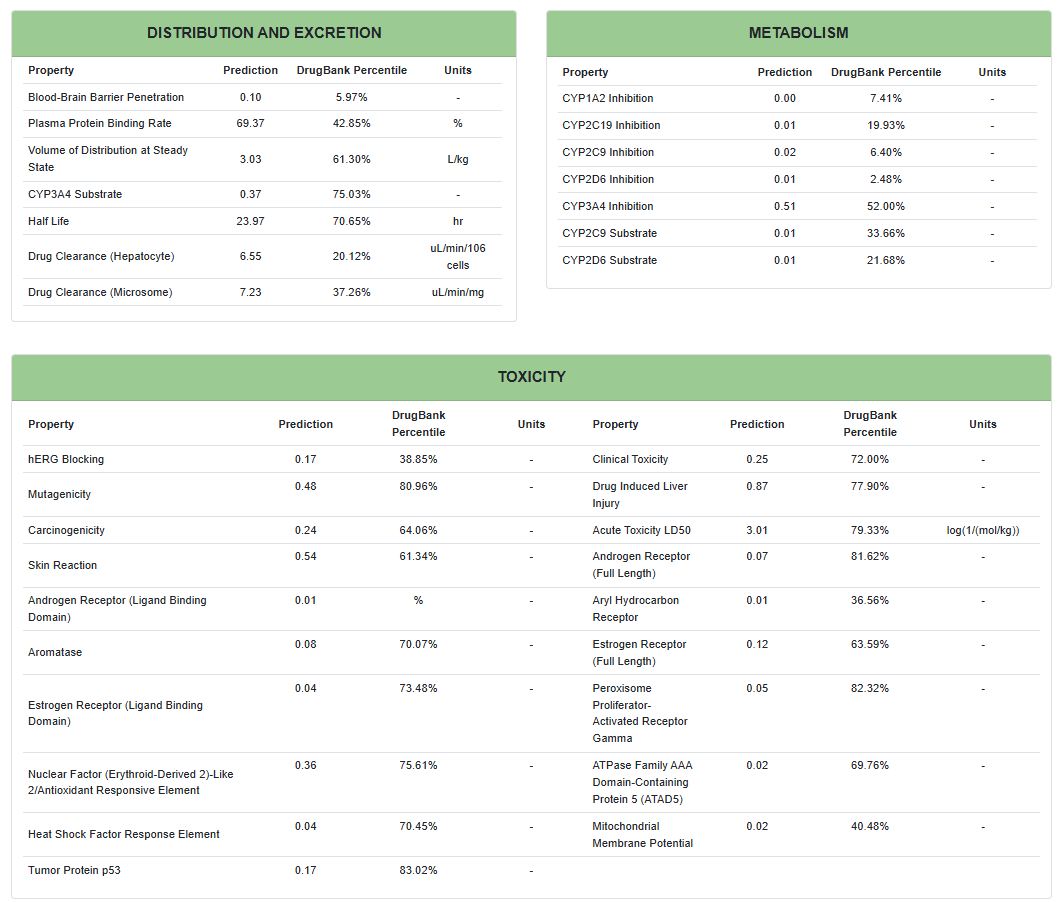
Each secondary metabolite in the database is associated with a dedicated detailed page. This page presents comprehensive information about the secondary metabolite, encompassing its species information, classification details, similarity-related data, and ADMET-relevant information. Additionally, it offers the "Secondary Metabolites-induced Gene Expression Profiles Prediction" feature. Users have the flexibility to customize predictions by selecting specific cell lines, time points, and dosages, enabling a more in-depth exploration of the metabolite's characteristics and potential impacts.
6. Use of ADMET predicting tool
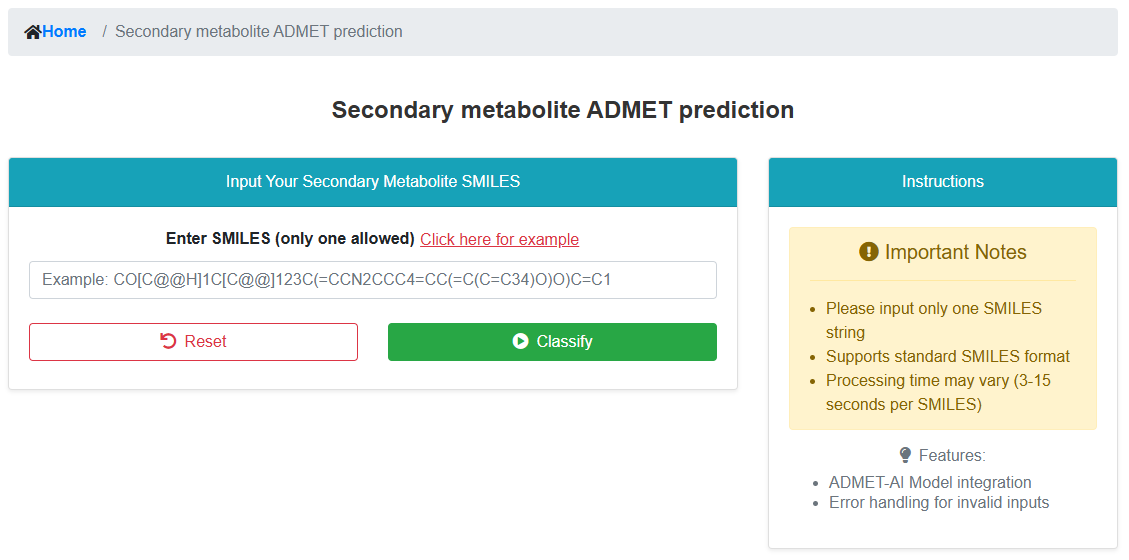
The ADMET (Absorption, Distribution, Metabolism, Excretion, and Toxicity) predicting tool offers users a valuable resource to forecast the key pharmacokinetic and toxicological properties of secondary metabolites. By simply inputting the SMILES of a secondary metabolite, users can obtain comprehensive predictions regarding its absorption into the bloodstream, distribution throughout the body, metabolic pathways it may undergo, excretion mechanisms, as well as potential toxicity profiles.
7. Use of secondary metabolite expression profiles predicting tool
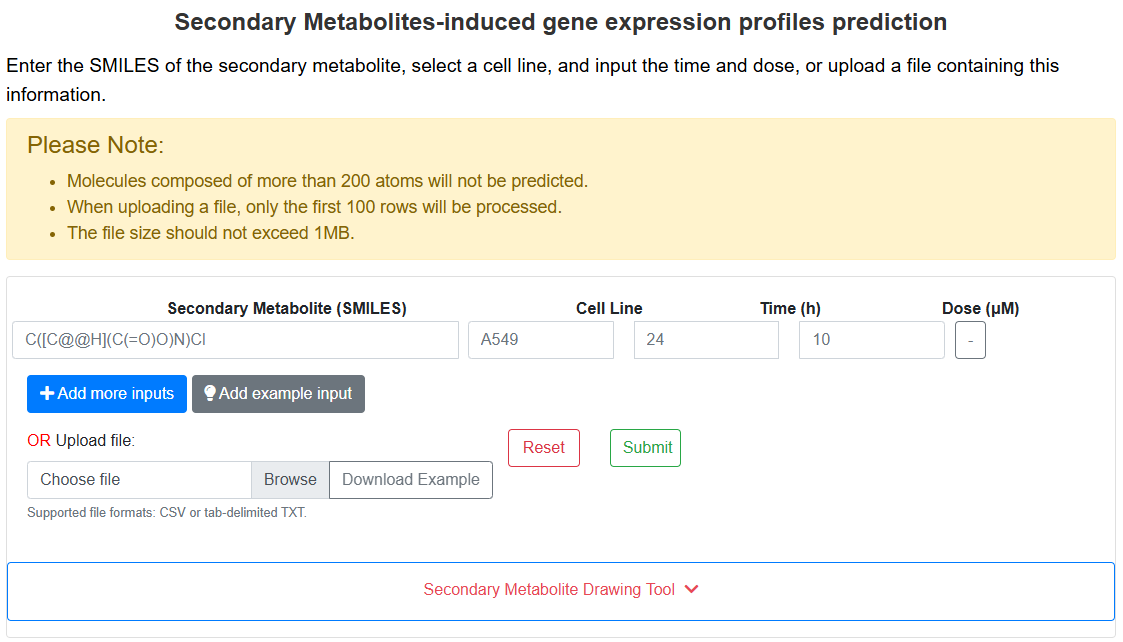
The secondary metabolite expression profiles predicting tool enables users to forecast the expression patterns of secondary metabolites across diverse tissues and under various conditions. To utilize this tool, users first input the SMILES of a secondary metabolite. Then, they can flexibly customize the prediction parameters by selecting specific cell lines, time points, and dosages. Through this two-step process, users can obtain predicted expression levels, which helps them explore the characteristics of metabolites in greater depth and understand their potential impacts in different biological contexts.
8. Use of the natural classification predicting tool
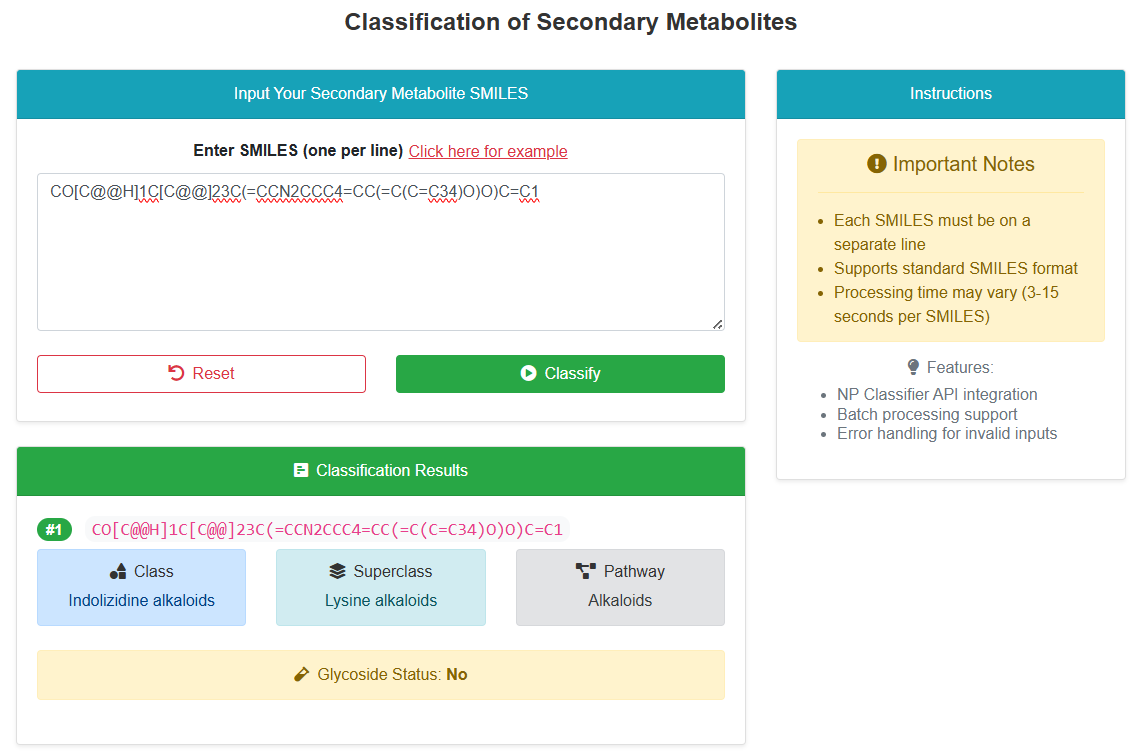
The natural classification predicting tool serves as a valuable resource for elucidating the classification of secondary metabolites, which offers crucial insights into their intricate biosynthetic pathways and functions. To obtain the classification details, users merely need to input the SMILES of a secondary metabolite. The tool will then provide three key classification elements: pathway, superclass, and class. Additionally, it will indicate the Glycoside Status, specifying whether the metabolite is glycosylated (yes) or not (no), thereby offering a more comprehensive understanding of the metabolite's structural and functional characteristics.
9. Case study
10. Contact
If you have any questions, suggestions, or need assistance with the database, please feel free to contact us.
Contact Email: greatchen@cdutcm.edu.cn